

IB SPECIFIED CONCEPTS
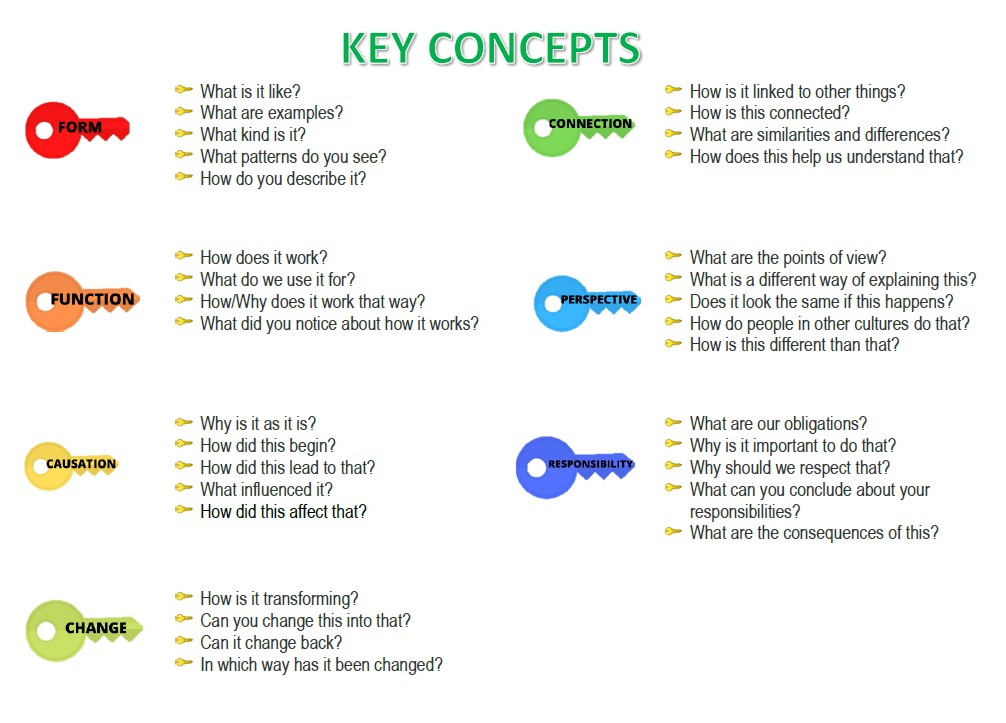
The specified concepts in the IB PYP, formerly known as key concepts, are fundamental ideas that drive inquiry and learning.
These concepts include form, function, causation, change, connection, perspective, responsibility, and reflection. Each concept encourages students to explore different aspects of the world around them. For example, form focuses on the nature and characteristics of things, while function examines how things work. Causation looks at reasons behind events, and change explores the process of transformation. Connection investigates relationships and interdependencies, perspective considers different viewpoints, responsibility emphasizes ethical actions, and reflection promotes self-awareness and evaluation. By engaging with these concepts, students develop a deeper understanding and become thoughtful, inquisitive learners.
Students can use the specified concepts in the IB PYP to deepen their understanding and enhance their learning experiences. Here's how:
-
Form: Students can investigate the characteristics and properties of objects, ideas, and phenomena, helping them understand what things are and how they are structured.
-
Function: By exploring how things work and their purposes, students can gain insights into the mechanisms and processes behind various systems and objects.
-
Causation: Understanding the reasons behind events and phenomena allows students to identify cause-and-effect relationships, fostering critical thinking and problem-solving skills.
-
Change: Students can examine the processes of transformation and development over time, helping them understand the dynamics of growth and evolution in various contexts.
-
Connection: Investigating relationships and interdependencies between different elements enables students to see how things are linked and how they influence each other.
-
Perspective: Considering different viewpoints and opinions helps students appreciate diversity and develop empathy, enhancing their ability to understand and respect others.
-
Responsibility: Reflecting on ethical implications and their own actions encourages students to make responsible choices and contribute positively to their communities.
-
Reflection: Engaging in self-assessment and evaluation allows students to think about their learning experiences, recognize their strengths and areas for improvement, and set goals for future growth.
By applying these concepts, students become more thoughtful, inquisitive, and well-rounded learners, equipped to navigate complex ideas and contribute meaningfully to the world.